
The early years of a child’s academic journey are often filled with finger painting, storytime, and playground games. Because of this playful environment, it can be easy to underestimate the profound structural importance of elementary education. In reality, this phase of schooling is the most critical period of intellectual, social, and emotional development in a person’s life.
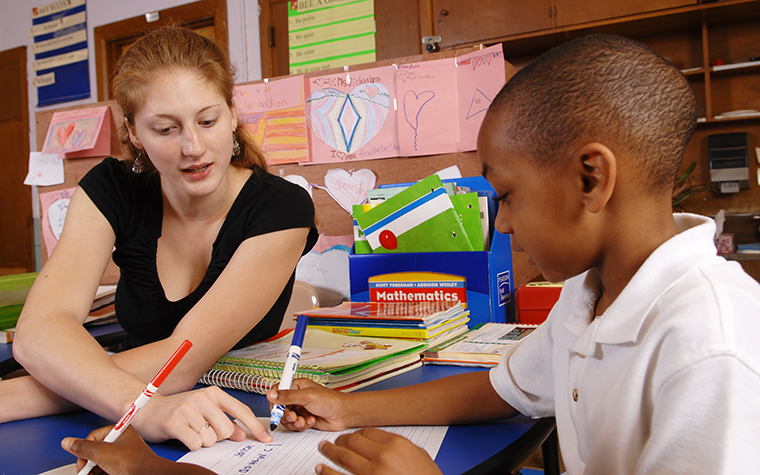
Elementary education serves as the foundational bedrock of the entire academic pipeline. It is the precise stage where children transition from learning to understand their immediate surroundings to developing the core cognitive skills required to navigate the wider world. Understanding how this system functions, and the deep impact it leaves, reveals why investing in primary classrooms is essential for societal progress.
The Cognitive Launchpad: Literacy and Numeracy
The primary objective of elementary education is to instill fundamental academic skills, specifically foundational literacy and numeracy. Before a child can study complex history, analyze literature, or solve algebraic equations in higher grades, they must first master the mechanics of reading and basic mathematics.
During the first few years of elementary school, a massive cognitive shift occurs: children move from “learning to read” to “reading to learn.” Once a child decodes phonics and begins reading fluently, textbooks become gateways to independent discovery.
Similarly, early mathematics introduces abstract thinking. By manipulating physical blocks or counting shapes, young minds learn the concepts of addition, subtraction, fractions, and patterns. These are not just isolated school subjects; they are the essential mental frameworks required for critical thinking, problem-solving, and logical reasoning throughout adulthood.
Beyond Academics: The Social and Emotional Sandbox
While reading and math are vital, an elementary school classroom functions equally as a social laboratory. For many children, entering kindergarten or first grade is their first prolonged experience outside the family bubble. It forces them to interact with a diverse group of peers and adapt to a structured community environment.
Key social-emotional milestones achieved during this period include:
- Cooperation and Conflict Resolution: Sharing supplies, working on group projects, and navigating playground rules teach children how to negotiate, compromise, and handle disagreements constructively.
- Empathy and Perspective: Interacting with classmates from various cultural backgrounds helps young students understand that other people have different feelings, viewpoints, and lived experiences.
- Self-Regulation: Sitting at a desk, waiting for a turn to speak, and focusing on a task teach essential impulse control and emotional regulation.
Developing these soft skills early in life is a strong predictor of future success. A child who learns to manage frustration and collaborate effectively in third grade is far more likely to thrive in high-pressure university and corporate settings later on.
Cultivating a Lifelong Love for Learning
The attitude a student develops toward school during their elementary years often sticks with them for life. If a young child feels safe, supported, and intellectually curious in their early classrooms, they develop a positive association with education.
Exceptional elementary educators excel at turning abstract concepts into engaging, hands-on experiences. A science lesson about plant life involves growing a seed in a paper cup; a history lesson transforms into a creative costume parade. This experiential learning fosters a growth mindset—the belief that intelligence and skills can be developed through dedication and hard work.
Conversely, if a child falls behind early without adequate support, they can quickly internalize the belief that they are simply “not good at school,” leading to disengagement and academic anxiety that can persist for decades.
Conclusion
Elementary education is far more than a safe childcare system or a preliminary introduction to basic facts. It is a transformative phase where the foundational architecture of the human mind is designed, built, and tested. By prioritizing strong literacy programs, nurturing social-emotional health, and fostering an environment of curiosity, primary schools shape the thinkers, innovators, and citizens of tomorrow. Ensuring that every child has access to high-quality elementary education is not just an investment in individual families—it is a direct investment in the stability, prosperity, and collective intelligence of our global future.